Planning that connects
finance, ops, and sales.
Most enterprise planning still happens in spreadsheets — disconnected from SAP, disconnected from reality. SAC changes that. ITA builds it so it actually gets used.
Your plans don't talk to each other.
Finance plans in Excel. Sales forecasts in Salesforce. Ops runs off SAP MRP. By the time anyone reconciles the numbers, they're already wrong.
Siloed planning cycles
Finance, sales, and ops build conflicting versions of the truth in separate tools.
Spreadsheet dependency
Critical decisions made from files that can't scale with the complexity of your business.
Disconnected from actuals
Plans drift from reality because SAP data never flows into the planning environment.
How Continuous Integrated Planning works.
xP&A breaks planning out of the finance silo and connects it across your entire organization — live SAP actuals, rolling forecasts, and one version of the truth shared by every function.
Connect your SAP data.
SAC connects directly to your SAP environment. Actuals flow in automatically — no manual uploads, no stale spreadsheet extracts. GIB statistical forecasts serve as the planning baseline.
Sales, COGS, open orders, and prior year actuals staged automatically by period and product.
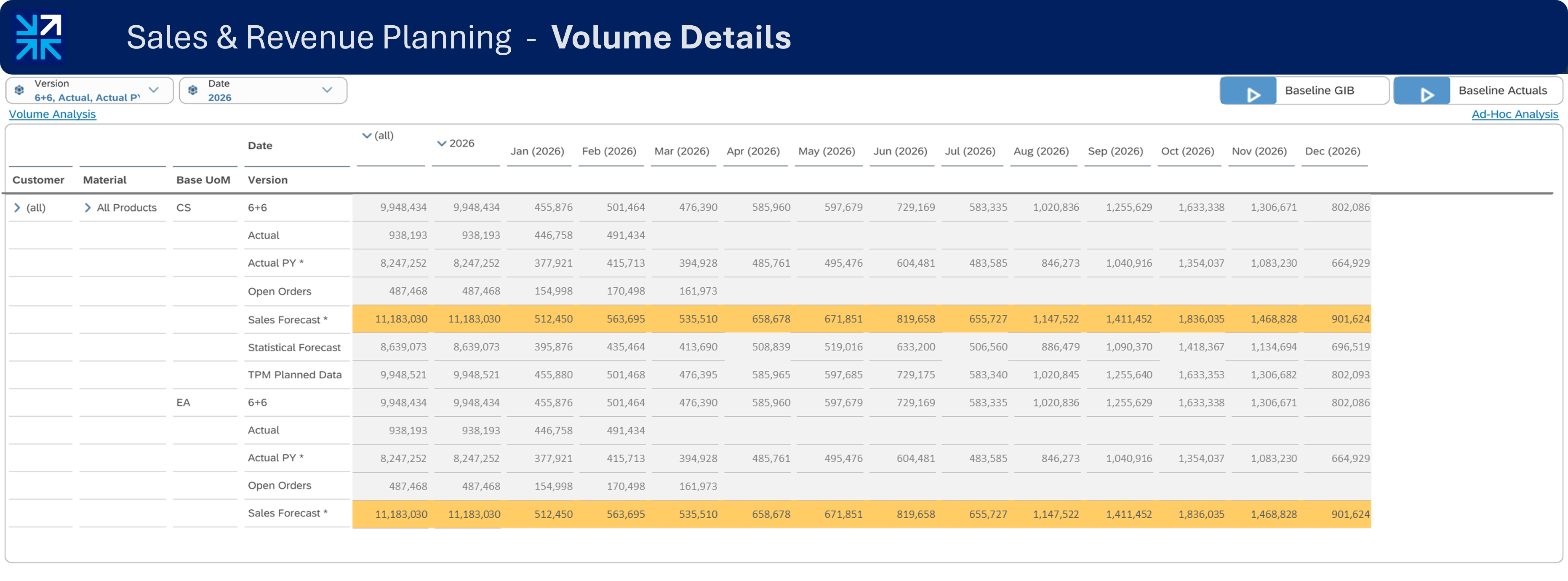
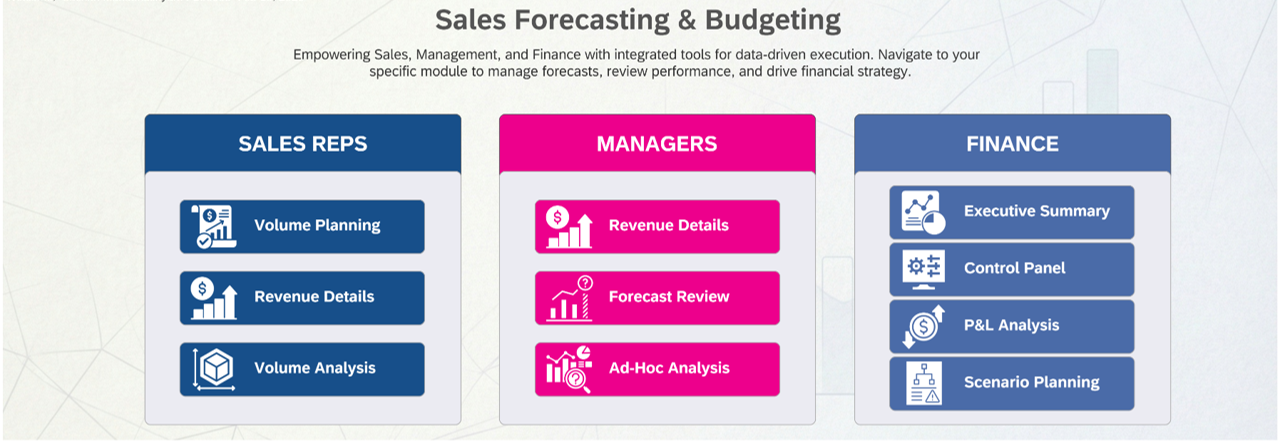
Each team plans in their view.
SAC delivers role-based planning workspaces — so Sales Reps adjust volume forecasts, Managers review performance and approve, and Finance controls the P&L model. Everyone works in the same system; no one sees more than they need to.
Version control and approval workflows keep every change accountable.
Analyze from every angle.
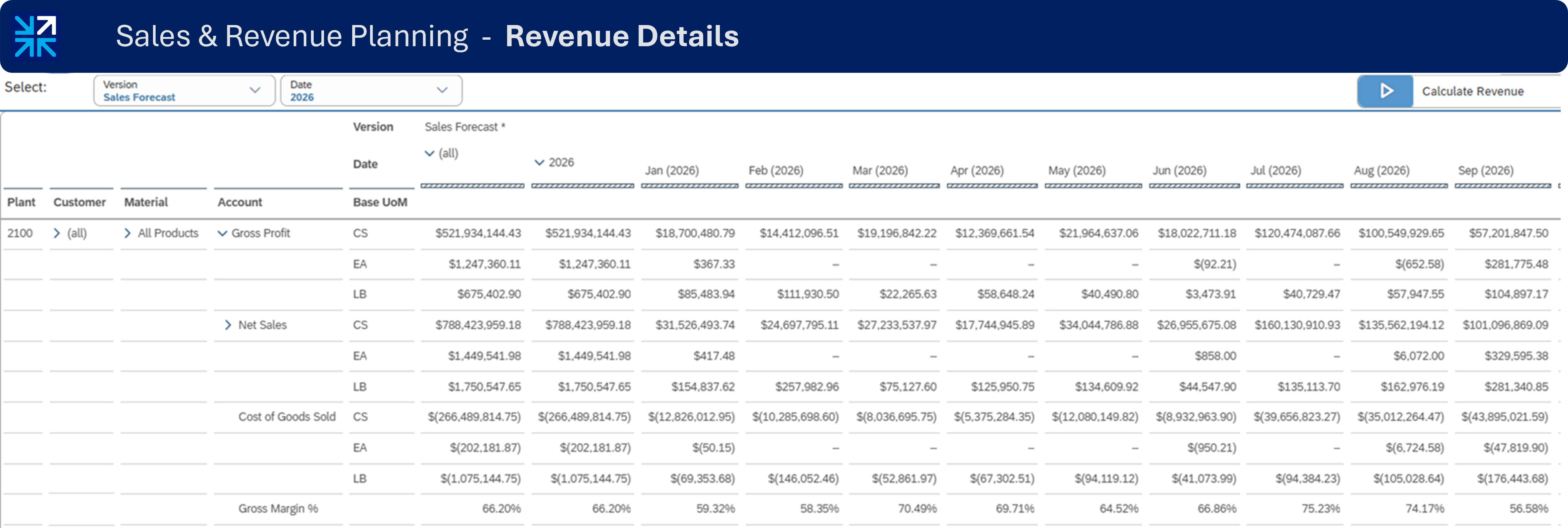
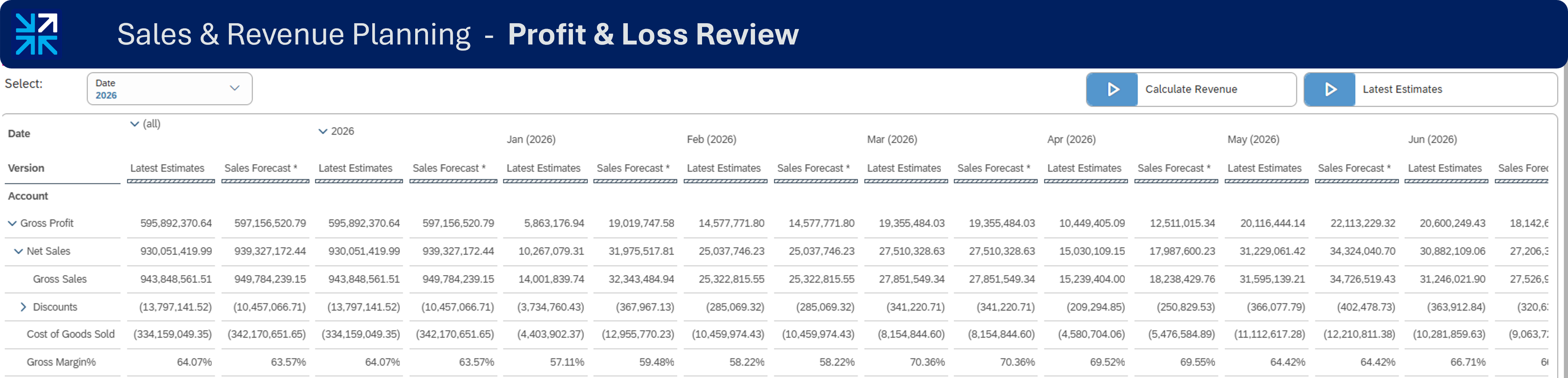
Once plans are aligned, SAC generates the P&L automatically — gross revenue, net revenue, COGS, and margin, by product and customer. Executives get a live summary dashboard that compares actuals vs. forecast vs. budget in real time.
No waiting for month-end close. No pivot tables. One view that's always current.
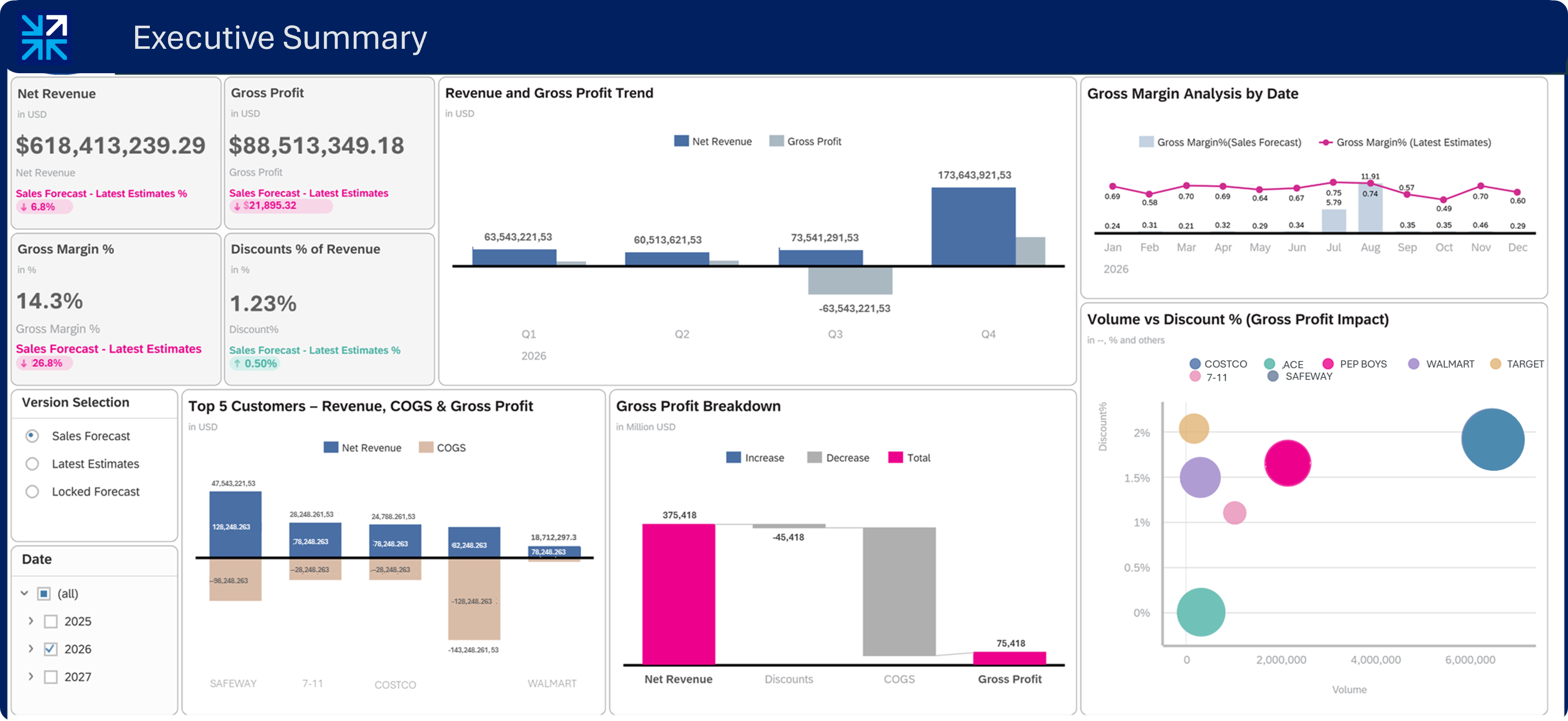
Every KPI.
One screen.
The SAC Executive Summary gives leadership a live view of net revenue, gross profit, margin trends, and customer-level performance — updated every time the plan changes.
See it from your seat.
SAC speaks differently to Finance, Sales, and Operations — because their questions are different.
P&L visibility that updates as the business changes.
Finance gets a fully connected P&L — from volume forecasts through pricing, trade spend, COGS, and margin. No more waiting for ops to send a spreadsheet.
- Revenue & margin planning linked to volume and pricing assumptions
- Actual vs. forecast vs. budget comparison at product and customer level
- Scenario planning — model multiple futures before committing
- Executive Summary dashboard with live KPI tracking
- Closed-loop visibility from trade spend to net revenue
Forecast adjustments that feed the business — not just a spreadsheet.
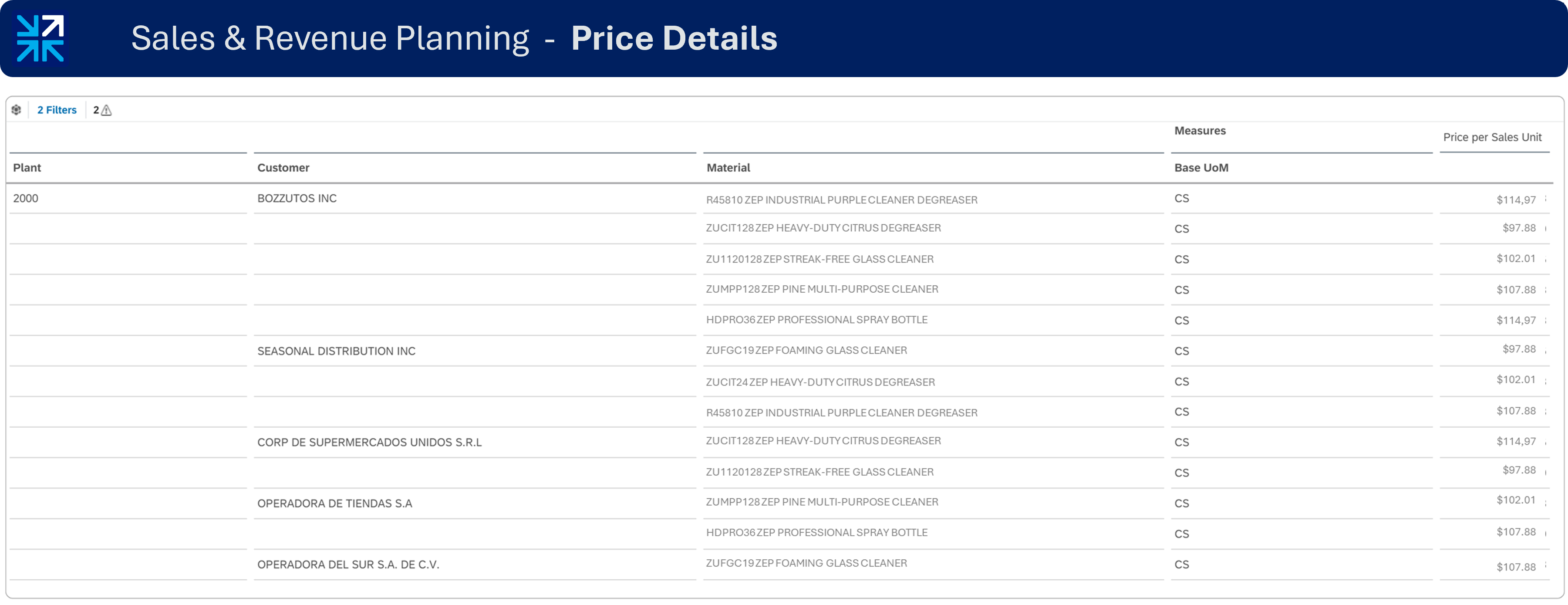
Sales reps submit volume overrides directly in SAC — reviewed against statistical baselines and routed through approval workflows before they impact the financial plan.
- Volume planning by customer, product, and region
- Forecast overrides reviewed against GIB statistical baseline
- Promotion planning — model lift and supply impact before launch
- Revenue detail visibility: what's driving the number
- Version control keeps every adjustment accountable
A demand plan that comes from the business, not a black box.
Operations sees the consensus demand plan — the output of finance, sales, and statistical forecasting working together. One number to plan against.
- GIB statistical forecast as the planning baseline
- Commercial adjustments visible and traceable by source
- Open orders and actuals staged automatically from SAP
- Prior year comparison and trend analysis built in
- Consensus demand output feeds directly back to GIB for supply planning
What Continuous Integrated Planning delivers.
finance, sales, and ops
no manual uploads
as the business changes
volume to margin
Ready to retire
your planning spreadsheets?
Let's talk about what a CIP environment could look like for your business.
Schedule a SAC Conversation →